Three edits call for more care than the others, because they touch something the buyer will check at the viewing, or people who have nothing to do with the sale: the sky, the pool water and the personal belongings of whoever lives in the home. The same question applies to all three. Does the edited photo show the property as it really is, under normal conditions?
The sky: the place, not that day’s weather
You don’t always get to choose the day of the shoot. A white or hazy sky turns facades gray, dulls the green of the garden and makes a property look gloomy even if it gets sun most of the year. Replacing a washed-out sky with a clear one is a common edit and, in most cases, a fair one: it changes nothing about the property, only a passing condition.
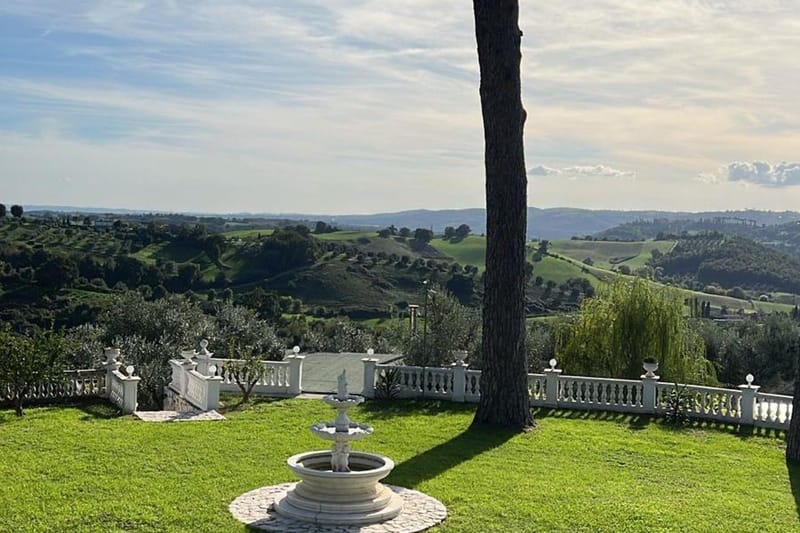
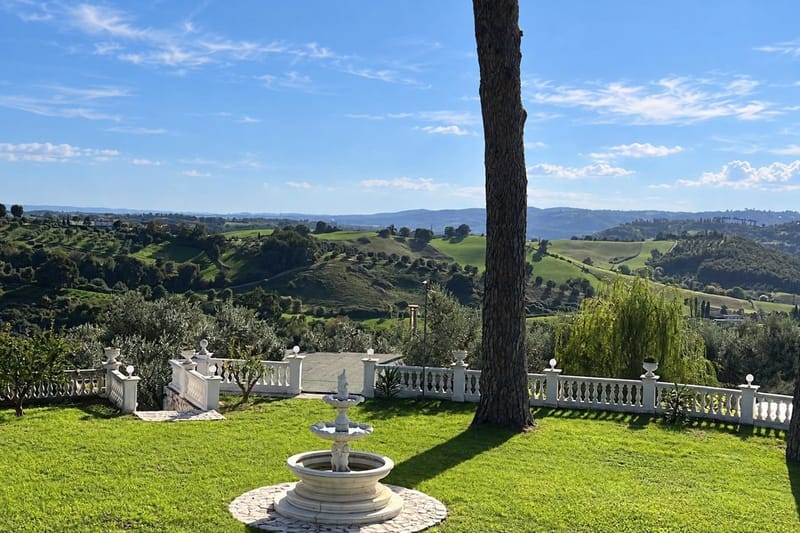
There are common-sense limits, though.
- The new sky has to be plausible for the place and match the light in the scene. If the shadows on the ground are soft, a strong sun in the sky does not add up.
- No spectacular sunsets on every photo: people spot them at once, and they make the whole listing look retouched.
- The sky must not cover or change what is on the horizon. A building across the street, a power pylon or a busy road are part of the setting, and the buyer will see them.
In the example above, the garden, the fountain, the pine and the hills stay where they are. Only the sky changes.
Water: how it looks with routine maintenance
A green pool in a photo suggests neglect and expense. Often, though, it is just a matter of season: before the spring cleaning, many outdoor pools look like that. Showing clear water represents the pool’s normal state after routine maintenance.
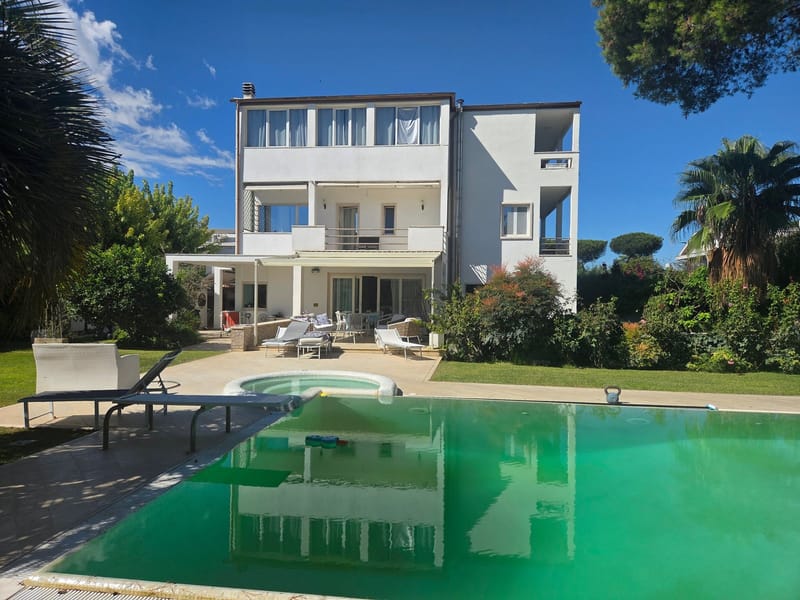

The line is structural damage. If the pool has cracks, missing tiles or equipment that needs replacing, blue water in the photo must not hide it: the problem will come out at the viewing, and with it goes the buyer’s trust in the listing and in the agent. When time allows, the best solution is still to have the pool cleaned and shoot again. Retouching is for when the listing cannot wait for the maintenance.
Privacy: the people who live there are not for sale
Lived-in homes are full of private life: family photos on the shelves, children’s drawings on the fridge, letters with names and addresses, papers on the desk, sometimes a license plate in the courtyard. In a public listing these details add nothing, and they can expose people who never chose to appear online. Recognizable faces and names are personal data.
The first rule is practical: before shooting, ask for photos, documents and personal items to be removed from the main rooms. Whatever cannot be moved, such as a collage hung on the wall or a license plate in a shared courtyard, gets blurred. The blur has to be firm, enough that no face can be recognized and no name read, and limited to the object, without touching the rest of the room.
Watch out for the less obvious details too: the name on the doorbell or the mailbox, a calendar with appointments, a computer screen left on, the photographer’s reflection in a mirror. They are small, but in a high-resolution photo they are perfectly legible.
In Dimorio, the privacy blur works only on the area with the personal photos and leaves everything else unchanged. For the same reason, we don’t show the original of our example on this page: it contains family photos.
One rule for all three: disclose
House hunters don’t expect raw photos; they expect honest ones. If the edit changes a passing condition, such as the sky, water that needs cleaning or a personal item, the photo stays true to the property. If it changes the property, it no longer does, and a listing that shows something that doesn’t exist risks becoming an unfair commercial practice.
Disclosing the edit helps, and it is also where European rules are heading: Article 50 of the EU Artificial Intelligence Act (AI Act) sets transparency obligations for images generated or edited with AI. Every photo you download from Dimorio carries a label that marks it as edited with AI. In the listing you can add one simple line, for example “Some photos have been digitally enhanced.”
In short
- Sky and water: yes, if they show normal conditions and don’t hide defects.
- Privacy: remove before you shoot, blur what is left.
- Always: compare with the original before publishing, and disclose the edit.
For interior light, see also how to use natural light in real estate photos.